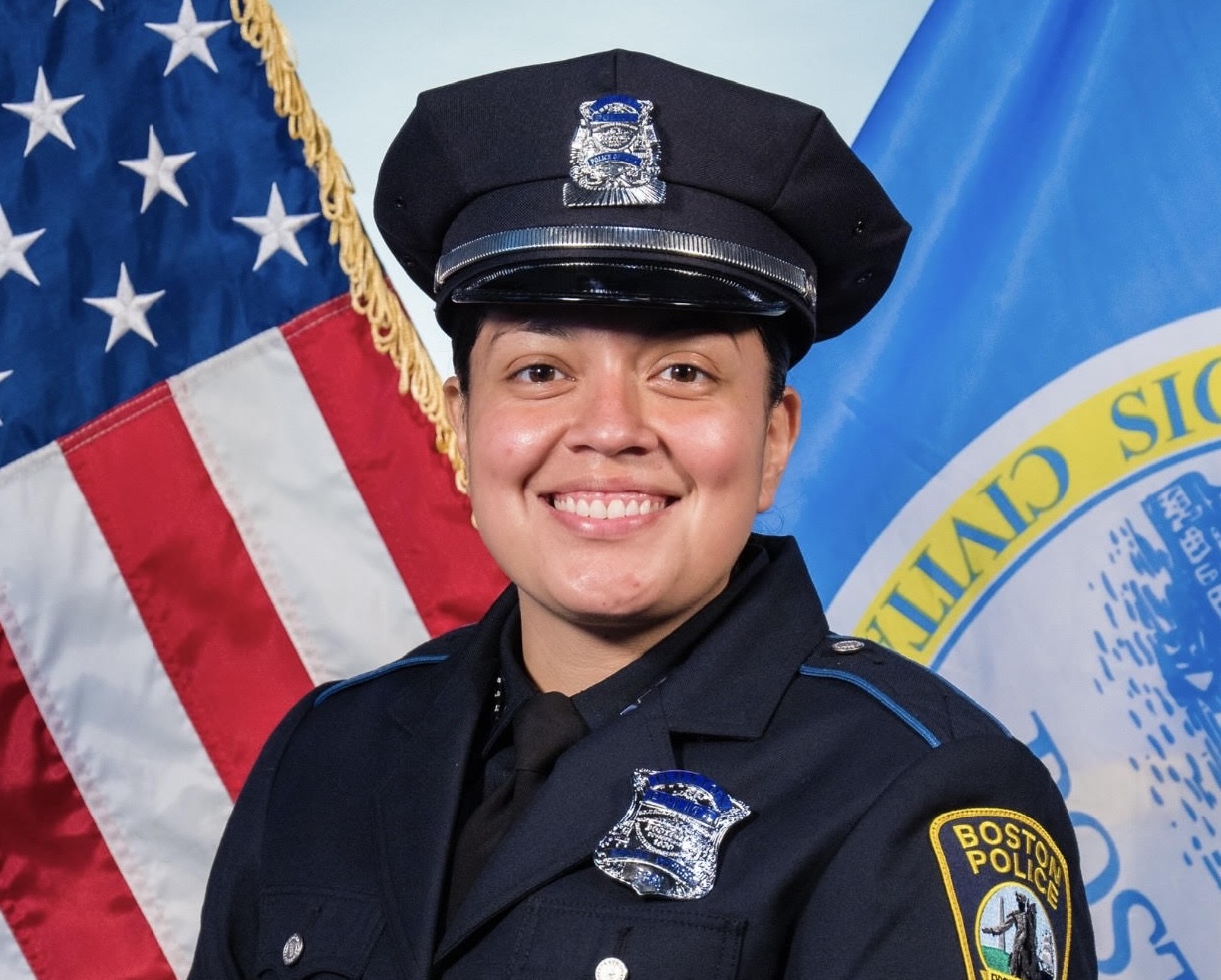
Officer Astrid Gonzalez
Boston Police Department
Boston, MA
What inspired you to become a police officer?
Growing up as a Latina female in Roxbury, MA, I saw both the good and the struggles we faced. I knew early on that I wanted to make a real difference, not just from the outside looking in but as someone who truly understood the people here. I had my first job in this neighborhood, went to high school here, and have walked these same streets my whole life. I was inspired by the idea of being someone my younger self would have looked up to, someone who could bridge the gap between law enforcement and the community we serve. I am giving back to the same community that shaped who I am. That sense of purpose is what inspired me and continues to drive me every day.
What drives you to succeed in your role?
What drives me most is knowing that I am serving the very community that raised me. These are not just strangers; I see neighbors, classmates, and family friends every day. I feel a strong responsibility to show up as my best self. I want to be someone the youth can look up to and the elders can trust. I want to be a positive representation of what policing can and should be: fair, compassionate, and community-focused. That personal connection makes the work deeply meaningful.
Can you share your most memorable moment on the job?
One of the most memorable and heartwarming experiences I continue to have is seeing the kids I once taught swim lessons to as a lifeguard now growing into confident, capable young adults. I often run into them at school functions and youth events like college and job fairs, sports games, or even in leadership roles at local community centers. Many are now in middle or high school, serving as role models for younger kids, staying active in sports, and even expressing interest in careers like law enforcement. Watching them grow into positive, driven individuals is incredibly fulfilling and serves as a powerful reminder of why I chose this path.
What challenges have you encountered in your career?
Honestly, one of my biggest challenges was getting into shape for the academy. I was never someone who loved working out, but I was determined. I had to push through my own self-doubt and physical limits. It took dedication, discipline, and a lot of sweat, but I did it. Another challenge has been earning the trust of people in the community who have had negative experiences with law enforcement. Being from here helps, but trust has to be earned every single day.
What advice would you give to women considering a career in law enforcement?
Do not count yourself out before you even begin. You do not have to fit a certain mold to succeed in this job. If you have the heart for it, the determination, and the willingness to keep learning, you belong here. It is not always easy, but it is worth it. Surround yourself with people who believe in you, and do not be afraid to lean on your strengths, especially your empathy and ability to connect with others.
What do you enjoy doing in your spare time that helps you stay grounded?
I really enjoy spending time with family and friends, especially those who knew me long before the badge. They help keep me grounded and balanced. I also love to travel and explore new places. There is something refreshing about stepping into a new environment. And when it comes to food, I am definitely a big foodie. Trying dishes from different cultures is one of my absolute favorite pastimes. It is more than just eating. It is a way to connect with people and experiences from all over the world. And while I may not love working out, I have learned to appreciate staying active. It clears my head and helps me stay ready for the job.
How we’re changing policing
The 30×30 Initiative is a coalition of police leaders, researchers, and professional organizations committed to advancing and supporting the representation, experiences, and well-being of women at all levels of law enforcement, both in the U.S. and beyond.
Research shows that women play a crucial role in building community trust, de-escalating conflict, and improving public safety outcomes, with evidence linked to reduced use of force and enhanced relationships with the communities they serve. However, women represent less than 14% of sworn officers and 20% of recruits in state and local law enforcement agencies. Additionally, about 40% of the approximately 18,000 law enforcement agencies in the U.S. have no full-time women officers (Source: Bureau of Justice Statistics).
We are collaborating with hundreds of agencies to make law enforcement a profession where qualified women who are drawn to it feel welcomed and supported while ensuring agencies address their unique needs and foster their success.